
How to Solve Murder Sudoku: The Complete Method
Every murder sudoku can be solved by pure logic: no guessing, no trial and error you have to undo later. This guide gives you a five-step routine, an overview of the 8 deduction techniques, and a complete 6 × 6 case solved line by line. If you have never played, read the rules in one minute first, then come back.
The 5-step method
Strong solvers do not stare at the grid hoping for inspiration. They run the same loop again and again, and each pass places at least one person.
- Survey the scene. Count the rooms, note which squares are blocked by furniture, and look for rare objects: a single rug or a single piano turns a vague clue into a precise one.
- Place the certainties. Start with people whose clues leave only one square. Usually that is a clue naming a unique piece of furniture, or a room combined with an edge.
- Clear rows and columns. Every placed person removes a full row and a full column from everyone else. Cross those squares out at once, on paper or with the Rule out tool.
- Combine the relational clues. "Higher row than", "further left than", "same room as" and "diagonally" clues become sharp as soon as one of the two people is placed. Reread them after every placement.
- Close the victim's room. The killer is the only suspect in the victim's room. Use that rule in both directions: to find the killer at the end, and to keep other suspects out of that room along the way.
When a pass places nobody, do not guess. Go back to step 4 and look for a row or a column that only one person can still reach. There is always one more deduction available, because every case has exactly one solution.
Where to start: fixed clues
A fixed clue pins a person to a small area without involving anybody else: "Frank is in the entrance hall", "Lola is in the leftmost column", "Dante is on a stool". Start there, for two reasons.
First, fixed clues are cheap. You do not need any other person in place to use them. Second, they compound. A room clue and an edge clue on the same person often intersect in one or two squares. A furniture clue is even better when that object appears once on the plan.
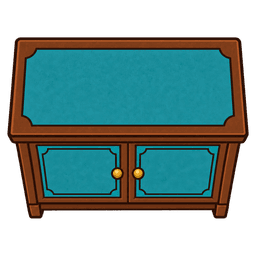
Read the furniture carefully. You can stand on chairs, armchairs, rugs, stools, benches and beds. Pianos, bookshelves, plants, tables, stoves, cabinets, crates, counters, statues, bathtubs and desks block their square. A blocked square still matters: "next to a plant" means sharing a side with that plant's square, inside the same room.
The 8 deduction techniques (overview)
Every reasoning step in Capodoku falls into one of eight techniques. You will meet them in this order as the ranks go up.
- Fixed clues first. Use the clues that need nobody else: rooms, edges, unique furniture.
- Row and column pressure. A row or column that only one person can still reach belongs to that person.
- Turning directions into zones. "Higher than" and "further left than" cut the grid in two. Combine them with room shapes and they often leave a single square.
- Forced cells. When a person has one possible square left, place them, even if no clue points there directly.
- Room capacity. "Alone in their room" and "nobody in the kitchen" empty whole rooms for everybody else.
- Clue wording traps. "Next to" never crosses a wall, "higher" does not mean "directly above", and a negative clue rules out more than it seems.
- Proof by contradiction. At the Legend rank, test a square: if placing someone there makes the case impossible, cross it out.
- The alone-with-the-victim rule. Exactly one suspect shares the victim's room. That rule places people long before the end.
The full guide gives each technique its own mini-grid. Here, they appear in a real case.
Worked example: a 6×6 case solved step by step
The case below is an Inspector-rank grid generated and checked by the Capodoku engine. Six people at the Manor: Rosa, the victim, and five suspects. You can play it right here before reading on.
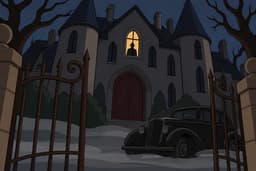
The Study Door Was Locked
The Manor · Inspector · 6 × 6
Place: put down the chosen person's pawn.
Rosa · the Widow
VictimThe victim. She was alone with the killer. She was in the library.
Pick a person, then tap a square on the floor plan.
“Next to”: a square that touches by a side, in the same room. Corners don't count, and a wall always breaks contact.
The clues:
- Rosa is in the library.
- Tony is on a rug.
- Enzo's row is higher than Sal's.
- Sal's column is further left than Rosa's.
- Sal is in the library.
- Mario's row is higher than Nico's.
- Nico touches Mario diagonally (corner to corner).
The plan has five rooms. The library fills the top-left 4 × 4 block. The smoking room is the 2 × 2 block in the top-right corner. The kitchen is L-shaped, from rows 3 and 4 on the right down to the bottom right. The drawing room is the 2 × 2 block in the bottom-left corner, and the chapel is the narrow strip between them, in column 3 of rows 5 and 6.
Show the step-by-step solution
- Tony (fixed clue). There is only one rug on the plan, in the smoking room, row 2, column 5. Tony stands on it. Row 2 and column 5 are now closed to everyone else.
- Who is in the library? (the alone-with-the-victim rule). Rosa, the victim, is in the library, and so is Sal. Since only one suspect can share the victim's room, Sal is the killer and no other suspect may enter the library. Enzo, Mario and Nico must be somewhere else.
- The smoking room is full (room capacity). Its four squares are row 1, column 5 (column 5 is taken), row 1, column 6 (a cabinet), row 2, column 6 (row 2 is taken) and Tony's rug. Enzo, Mario and Nico therefore go to the kitchen, the drawing room or the chapel, which all sit in rows 3 to 6.
- Enzo (turning directions into zones). Enzo's row is higher than Sal's, and Sal is in the library, so at most in row 4. If Enzo were in row 5 or 6, Sal would have to be even lower: impossible. In rows 3 and 4, outside the library, the only square Enzo can use is row 3, column 6 in the kitchen (column 5 is taken and row 4, column 6 holds a cabinet). Sal, below him and still in the library, is in row 4.
- Rows for Rosa, Mario and Nico (row pressure). Rows 2, 3 and 4 are taken. Rosa is in the library, so row 1 is hers. Mario and Nico share rows 5 and 6, and Mario is higher: Mario in row 5, Nico in row 6.
- Mario (column pressure). In row 4, the library squares in columns 1 and 4 hold a desk and a bookshelf, so Sal is in column 2 or 3. Sal is further left than Rosa, so Rosa is in column 3 or 4. Who can still use column 1? Not Rosa, not Sal, and not Nico: from row 6, column 1, he could only touch Mario diagonally if Mario stood on the piano at row 5, column 2. Column 1 belongs to Mario: row 5, column 1, in the drawing room.
- Nico (forced cell). Nico touches Mario diagonally from row 6: row 6, column 2, also in the drawing room.
- Sal and Rosa (forced cells). Column 2 is now Nico's, so Sal is in row 4, column 3. Rosa takes the last column, 4: row 1, column 4.
- The verdict. Rosa lies in the library, and the only suspect in the library is Sal. Sal is the killer.






Culprit: Sal. The only suspect in the library, with Rosa.
Notice what happened at step 2. The killer was known long before the last person was placed, and that knowledge emptied the largest room on the plan for three suspects. That is why the alone-with-the-victim rule is a technique, not just a way to read the answer.
Common beginner mistakes
- Treating corners as "next to". "Next to" means sharing a side. Only the diagonal clue uses corners, and it says so.
- Letting a wall slip. Two squares on either side of a wall never count as next to each other, even though they touch on the plan.
- Reading "higher row" as "directly above". Any row closer to the top satisfies the clue. The same goes for "further left".
- Forgetting the victim. The victim takes a row and a column like everybody else. Leaving them for the end often hides an easy placement.
- Guessing to "see what happens". A wrong guess spreads silently through the grid. If you must test an idea, test one square and look for a contradiction right away: that is technique 7, done carefully.
- Ignoring negative clues. "Mario is not next to any table" can remove half a room at once.
If killer sudoku is your background, beware: the name is similar but the logic is different. Murder sudoku vs killer sudoku compares the two. For any term in this guide, the glossary has a one-line definition.
How to get faster
Speed comes from habits, not from rushing.
- Cross out as you go. Every placement should be followed by crossing out its row and column. On paper, a light pencil stroke is enough; in the grid, the Rule out tool does the same job.
- Use the pencil for pairs. When a person has exactly two possible squares, note both. Pairs collide with other pairs and resolve themselves.
- Reread one clue per placement. After placing someone, reread only the clues that mention them. That is where the next deduction almost always hides.
- Check early, not late. "Check my grid" is free and unlimited: it shows a contradiction in red without revealing the answer. Use it whenever a placement feels shaky.
- Practice at one rank. Five cases in a row at the same rank train your eye far better than jumping around.
Practice ladder: which cases to try next
- Start with today's Daily Case: the week runs from a gentle 6 × 6 on Monday to a 10 × 10 on Sunday.
- Play a few Rookie grids. The more easy cases page lists them, each with progressive hints and a full solution.
- Move to Inspector once you place the first person within a minute. Relational clues start to matter there.
- Try Chief when you stop needing hints at Inspector. Look for groups of two or three people locked into the same rows.
- Legend comes last. Expect at least one "what if" test per case, done one square at a time.
Go further (all guides)
Each technique in this method has its own detailed page, with a mini-grid and the exact moment it appears in real cases. You will find them, along with printable puzzles and the history behind the game's 1920s world, in all guides.